Wednesday, November 14, 2012

Helping National FFA Convention Attendees Discover how they can "Grow" at Penn State

What gets these University students excited?  

For them it was over 54,000 blue FFA jackets in the city of Indianapolis, Indiana.  During the week of October 23rd-27th, over 20 Penn State students traveled to the National FFA Convention to represent the Pennsylvania State University College of Agricultural Sciences.  The National FFA Organization is a youth organization that makes a difference in the lives of students by developing their potential for premier leadership, personal growth, and career success.The National FFA Convention is held once a year to give agricultural students in the National FFA Organization the opportunity to compete in various career development events, take part in motivational sessions, and explore their college and career futures.

2012 Penn State Recruitment Staff!
Throughout the week Penn State students assisted in several career development events including Parliamentary Procedure, Food Sciences, and Veterinary Science.  Students also spent many hours recruiting students at the collegiate fair.  At the Penn State booth, FFA members could ask questions about the University and the many opportunities in the College of Agricultural Sciences.  


Matt Dodson, AEE major and 2016 Student Teacher Candidate, said, "This experience helped me see how many opportunities I can introduce my future students to in the Food, Fiber, and Natural Resource Industry!"

FFA members also got to test their knowledge in a game of Jeopardy that highlighted facts about FFA, agriculture, and Penn State University.  Oh did we mention that students could even get a free cookie!  Kudos to a job well done representing our University!

Check out the pure energy from the National FFA Convention Theme Video below:


To learn more about starting on the path to having a career that makes positive impact on the lives of students across the globe by becoming an agricultural educator, please contact the agricultural teacher education program at teachag@psu.edu. Follow us on Twitter @TeachAgPSU, on Facebook at www.facebook.com/PSUTeachAg

Saturday, November 3, 2012

Walker, 2013 Student Teacher, selected as National Champion in Essay Contest

Indianapolis - Josh Walker, a 2013 student teacher at Mohawk HS, was recently selected as the National Champion in the National Alpha Tau Alpha Essay Contest with entry entitled, "Agricultural Development: Selfish gain or altruistic service?"

The National Collegiate Agricultural Education Essay contest is hosted on an annual basis by the National Alpha Tau Alpha: the honorary fraternity of agricultural education. Any student in the nation who is a member of an ATA Chapter, a Collegiate FFA Chapter or any agricultural education organization is eligible to participate.  The 2012 topic was: The American role in providing agricultural extension support in developing countries. For winning, Josh will received a plaque and a check for $100.00. His essay will be submitted for publication  in The Agricultural Education Magazine.


Josh said, "I am very thankful for the courses in my agricultural teacher preparation program at Penn State. Specifically, INTAG 100 was extremely helpful in developing my knowledge to be able to address this essay topic." To read Josh's 750 word essay, please click here: http://teachagpsu.blogspot.com/2012/11/walkers-national-winning-essay.html


Josh Walker

The Penn State Teach Ag! Program is very proud of Josh. We wish him the best of luck this spring as he completes his student teacher internship at Mohawk HS with Penn State Alumnus and current Mohawk Agriscience Teacher Cliff Wallace.

To learn more about starting on the path to having a career that makes positive impact on the lives of students across the globe by becoming an agricultural educator, please contact the agricultural teacher education program at teachag@psu.edu. Follow us on Twitter at TeachAgPSU, on Facebook at www.facebook.com/PSUTeachAg, or on our blog at http://teachagpsu.blogspot.com

Walker's National Winning Essay - Agricultural Development: Selfish gain or altruistic service?


Agricultural Development: Selfish gain or altruistic service?

Submitted by:
Josh Walker
2013 Student Teacher at Mohawk High School
 Josh Walker,
2013 Student Teacher
 
America has a substantial role in providing agricultural extension support to developing nations across the world providing more than 1 billion dollars (USAID, 2012). While there can be a persuasive, logical discussion that the nation’s moral obligation is to provide support in the norm of extension and education in and about agriculture, there is also an ethical responsibility to not push products and services from large American organizations to these countries for purely profit reasons (Brown, 1981). The American agricultural education and extension service should strive to provide the best solutions that promote long term independence and sustainability to the development of these nations while honoring the indigenous knowledge of the communities alive. The challenge is: how?


Agricultural extension should not be fueled by personal agendas.
For effective extension in developing countries, America’s sincere intention and priority should be on bettering the livelihoods of the communities. As a nation, we cannot let our own agendas and self-interests dictate the support we provide to these countries (Brown, 1981). There is an interesting case study that leads insight to this with Kenya under British control. Before Britain realized the potential Kenya had as a strong tea leaf supplier, Kenya produced a wide variety of native fruits and vegetables that would sustain them throughout the year (Thurow & Kilman, 2009). However, Britain’s obsession with tea and the money involved in the markets forced Kenya to become a major supplier of tea leaves. In exchange for tea leaves, Britain would provide the Kenyan people with a food supply.

The manipulation by the British with Kenya indicated that Britain did not put Kenya’s interests first. Britain profited over the trade agreements with other countries for tea leaves and provided Kenya with a scarce, barely sustainable food supply. Kenyans lost their capacity to grow their own food as they were so dependent of Great Britain to provide their nourishment. Over time, the climate in Kenya changed, creating less and less optimal land to grow tea, which lead to a diminishing Great Britain’s food support. Currently, thousands of Kenyans do not receive the needed daily caloric intake for survival.


Agricultural extension must be aware of indigenous knowledge The lesson is that as a nation, we must learn the indigenous knowledge with the area that services are intended to be provided. The goal of any agricultural extension service cannot be to supplant native culture and replace it with American culture. As extension service agents, insights into the traditions and customs of a native community and look for ways of improving methods are essential (Brown, 1981).

Agricultural extension services must take a bottom up approach combined with indigenous knowledge to provide the most effective services. Agricultural extension agents who do this will go out into the community and discover the wants and desires of the community they are serving. These agents, who have a strong awareness of what is available to the communities (i.e. resources, inputs, markets) can tailor sustainable solutions to real community issues.

So, what can be done by the American agricultural extension service?
In developing nations access to premier seeds, chemicals, and markets is severely limited or unreliable. Giving farmers access to maximum yield seed and chemicals is immoral when there is no guarantee of being able to secure them the following year because of unstable connections to these suppliers.

One service that should be provided by every agricultural extension service is the creation of a Farmer’s Field School. Farmer’s field schools are tried and true in providing ways for farmers to seek problem resolution. A relevant example can be found in Indonesia. During the 1960’s, Indonesia faced a serious food crisis from reduced rice yields. During that time, Farmer Field Schools (FFS) were just taking shape to combat the White Stem Borer, an insect that affected the rice plant, and educated the farmers about the options available to them to combat the pest (Ooi, 1998). When the information taken from the FFS was effective, farmers were more than willing to share with their neighbors and the information spread.

American extension services need to take a planned approach when providing aid. While this brief article only describes one approach the extension service provides aid to developing countries, there are many more that can be considered. When providing services to areas of need, it is vitally important to tailor solutions that match the indigenous knowledge and needs of the community without nationalistic agenda’s influencing options.


Bibliography

Brown, L. (1981). Innovation Diffusion: A New Perspective. London, UK: Methuen Young Books.

Ooi, P. A. C. (1998). Beyond the Farmer Field School: IPM and Empowerment in Indonesia. International Institute for Environment and Development (IIED) Gatekeeper Series No. 78. London. 16 pp. (Originally presented at the International Conference of IPM - Theory and Practice, Developing Sustainable Agriculture, Guangzhou, China June 15 - 20, 1998)

Thurow, T. & Kilman, S. (2009). Enough: Why the World’s Poorest Starve in an Age of Plenty. New York, NY: PublicAffairs.

United States Agency for International Development. (2012). Where does the money go?. Retrieved from http://www.usaid.gov/results-and-data/budget-spending/where-does-money-go

Tuesday, October 30, 2012

McCollum, AEE Senior and 2013 Student Teacher, excited to make impact at Central Columbia

Although she grew up on a farm, Mackenzie McCollum only enrolled in one agriculture class throughout her entire high school career. That class, during her senior year, made her think twice about her future career path when making decisions about what to study in college. Mackenzie began her career at Penn State by studying Veterinary and Biomedical Sciences; however, she soon changed her mind, and switched her major to Agricultural and Extension Education. “Although I didn’t take the traditional path as most AEE students do, including being and active high school FFA member, I feel this has given me a unique perspective on agricultural education and the importance of FFA, the intra-curricular student organization affiliated with agricultural education program. I changed my major because I love to teach, and the diversity found in agricultural education creates endless opportunities.”  


Mackenzie’s minor is in International Agriculture. Mackenzie will graduate from Penn State College of Agricultural Sciences in May with a Bachelor’s of Science degree in Agricultural and Extension Education, a Pennsylvania teaching certification, and a set of experiences and resources that will enable her to feel confident in taking on the real world.  Before graduating in May, Mackenzie Mccollum, will venture off to complete her last major task as a Penn State undergraduate. She will engage in her student teaching internship for 13 weeks this coming spring semester. She will be guiding students in grades 9-12 in the agricultural department at Central Columbia High School in Columbia County, PA. Central Columbia has a three teacher agriculture program with two teachers at the high school level and one at the middle school level.

To prepare for student teaching, Mackenzie is engaged in the classroom, learning about various teaching strategies, classroom management, and the different modalities of learning. She is also gearing up for student teaching by delivering lesson plans each week  in her contextual learning laboratory and is vigorously writing lesson plans, all while keeping in constant contact with her cooperating teacher, Mr. Doug Brown.

Mackenzie says “The program I will be student teaching in focuses heavily on agri-science and agricultural mechanics. In the classroom, they place a lot of emphasis on agronomy, forestry, wildlife, and animal sciences.” While at Central Columbia, Mackenzie will be teaching over eight units of instruction, including but not limited to: Plumbing, Introduction to Electricity, Food Science, FFA Leadership, and Woodworking. She claims, “I am most excited about interacting with the students on a daily basis, just being able to teach in a real classroom setting, and being involved with FFA as an advisor. Without a strong background in agricultural mechanics, I feel a little anxious about teaching so many courses related to that topic, but feel that Penn State has done a really great job to prepare me for my student teaching.” Mackenzie is also excited about traveling to National FFA Convention this October with the Central Columbia FFA Chapter. She will be provided with a great amount of experiences to best assimilate what it’s really like to be in the profession of teaching agricultural education.

Along with Mackenzie, there are 13 agricultural and extension education students that will be student teaching this coming spring at high schools across the state of Pennsylvania. Their mission is to improve agricultural literacy and teach about the many facets of agriculture and the important role the industry plays in our everyday life. They will be a mentor and advisor to many students, teaching many life skills, while learning many valuable lessons as students themselves. Throughout their student teaching experiences and beyond graduation, these students will be supported with many professional development opportunities offered by the Center for Professional Personnel Development.

To learn more about starting on the path to having a career that makes positive impact on the lives of students across the globe tby becoming an agricultural educator, please contact the agricultural teacher education program at teachag@psu.edu. Follow us on Twitter at TeachAgPSU, on Facebook at www.facebook.com/PSUTeachAg, or on our blog at http://teachagpsu.blogspot.com

Monday, August 20, 2012

PSU Ag Ed student to compete for National FFA Officer

Penn State Ag Ed Sophmore Jenna Moser was selected to represent PA for the chance to become a National FFA Officer at this year's National FFA Convention to be held in Indianapolis, IN October 24-27, 2012.


National FFA Officers give up a year of there lives to serve the FFA in a variety of functions. They will represent the FFA at the local, state, national, and even international levels. National FFA Officers travel more than 100,000 miles during their year of service and spend much of their time living in hotel rooms and eating meals on the go. They have opportunities to meet thousands of people including corporate CEOs, government officials, and FFA members from around the country and spread the message of FFA and the importance of Agricultural Education in our future.

We asked Jenna a few questions about what this experience has meant to her.

Jenna, can you tell us what this whole experience has meant to you?


In October of 2008, I attended my very first National FFA Convention in Indianapolis.  I remember being completely immersed in the sessions and feeling empowered by a National Officer’s charge to make a difference.  It was during that very moment in the crowd of thousands that I decided I wanted to advance as far as possible in the FFA, and serve as a National Officer.  Initially I thought the role of National Officers was to perform at the convention in October, and I was in love with that idea.  As I continued to learn more about the organization I was able to better define the reason why I wanted to serve.  Now four years later, I still love the idea of being up in front of thousands of people and simultaneously speaking to them each individually, motivating them to make their communities better, and to strengthen their connections with others.  While that moment is an extremely important one, I acknowledge that the smaller portions along the way are just as necessary if not more.  Those portions are to listen to chapter members, meet with industry representatives and partners, and to share the story of agriculture, agriculture education, and the FFA with people everywhere.  The opportunity that I am blessed with now, to serve as the National Officer Candidate for the FFA, is much more than a four year dream.  This opportunity is a chance to make myself smaller so that I can recognize and encourage the greatness of everyone else!

What have you been doing to prepare for this opportunity?

    • Met with American Farm Bureau
    • Met with USDA Chief of Staff Krysta Harden, discussed agriculture issues
    • Job Shadowed, Max Finberg, who works in a White House Office in the department of Ministries and Faith-Based organizations.  During shadow experience attended a meeting in the First Lady’s Office.
    • Meeting with Pfizer to learn more about them, discuss agriculture issues, and participate in mock interviews
    • Meeting with Monsanto to learn more about how they operate, discuss agriculture issues, tour facility, participate in mock interviews 
    • Meeting with National Corn Growers Association to learn how they interact with people, expand my knowledge base about them and tour their facilities 
    • Visiting with an urban agriculture teachers in St. Louis who will discuss Missouri FFA, agriculture, and how her chapter operates (hopefully will be able to meet with a few FFA members).  In addition, the teacher is setting up local tours to botanical gardens, and other agriculture programs – this is free of charge.
    • [I plan to] Attend training organized by a past National Officer Candidate, Dr. David Frazier, who knows the National Officer Selection process very well.  This session is free of charge, with the exception of the flight. 
    • During the training I will meet several other candidates and go through every interview round twice.
    • [I will be] Attending the World Food Prize Conference in Des Moines, Iowa to put my mind back into perspective as to why I am running for a National Office.  The answer is simple, that the world is so much greater than me.  I hope to instill in others everywhere the notion that there is a need to make a positive difference.
We in the Penn State Ag Ed Family wish Jenna the best of luck on her pursuit to become a National FFA Officer!

Friday, August 10, 2012

Moving On.....Catching up with 2012 Graduate Mackenzie Crooks

As our 2012 Student Teachers graduated from Penn State on May 5th, many of them had no idea what the future would bring. Now, as summer reaches its climax, many of them now have some idea of where their lives are heading. Over the course of the next few weeks, we will showcase some of our graduates and update you on where they are heading. In this weeks edition, we follow up with Mackenzie Crooks!


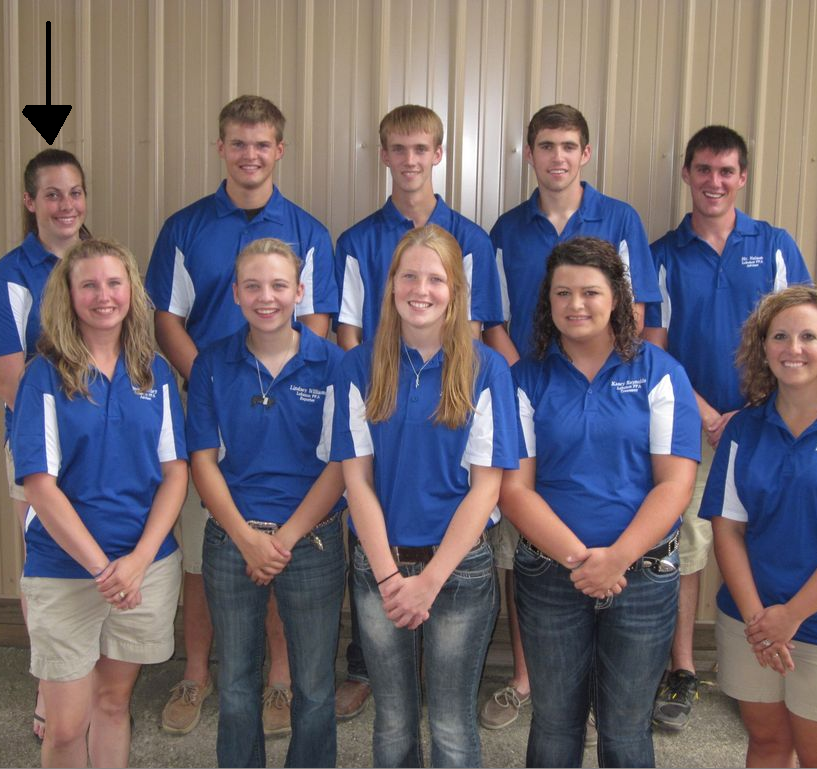
Ms. Crooks (top left) with her FFA Officers and other teachers of the Lebanon HS Agriculture Department. 
Mackenzie, a native of Irwin, PA, was a great addition to the class of 2012. She completed her student teaching experience under the guidance of Mr. Kyle Norman at Brockway High School. We asked Mackenzie some questions about her experiences at Penn State and what she is looking forward to in the future.


a)     Why did you choose this school to teach at?
I chose this school [ Lebanon High School] because it had everything I was looking for in a program.  The ag department is fairly new and one of the largest ones in the state of Indiana.  I set out looking for a multi-teacher program so I would have guidance from more experienced educators during my first (and most challenging) year of teaching.  I also liked that it was a newer program.  The department head is amazing and takes all of my ideas into consideration and has even used a few of them.  

b)     What are you most excited about for the upcoming year?
I am excited to have my own classroom and students!  This year will be challenging since the school is under construction and I have to switch rooms half way through the school year.  But I am probably most excited for the new greenhouse that is being built.  I will be the person in charge of over seeing it, and the administration has set the expectation bar high.  I have a lot of great ideas to try with the greenhouse and cannot wait to get in there.

c)      What advice do you have to the student teachers of next year about the Job Search?
The job search can be a very tedious thing, but stick with it.  Keep an open mind to moving somewhere new, and don't limit yourself to one area.  There are a TON of possibilities out there for you; you just have to find them!

d)     Did you feel prepared for the Job Search Process?
I felt very prepared for the job search process.  The last week that we spent at Penn State really helped me to gain the confidence that I needed to succeed in finding the right job.  The mock interviews were extremely helpful.


Wednesday, August 1, 2012

Moving On....Following up with 2012 Graduate Kristie Folk

As our 2012 Student Teachers graduated from Penn State on May 5th, many of them had no idea what the future would bring. Now, as summer reaches its climax, many of them now have some idea of where their lives are heading. Over the course of the next few weeks, we will showcase some of our graduates and update you on where they are heading. Next up....Kristie Folk

Kristie, a former State FFA officer, is a bright spot for the class of 2012. Her enthusiasm for Agricultural Education was infectious among her peers.  In the fall, she will be the full-time Ag Teacher at United High School in Armaugh, PA in Indiana County. (Of note, Kristie did her student teaching at United as well under the guidance of Ms. Cristen Black.) We asked Kristie some questions about her experiences at Penn State and what she is looking forward to in the future. 

1) Why did you choose United High School to teach at?
I chose to teach at United High School in Armagh, PA where I did my student teaching. It just so happened my cooperating teacher, mentor and friend, Mrs. Cristen Black, got a job in Kansas and I applied for the position at United. After two rounds of interviews with other amazing candidates, I was selected to teach at United. I love the school district, its location, the faculty/staff, and most of all the students. It is a very rural area with students who are excited about agriculture. The faculty / staff are friendly and willing to help whenever they can. Overall, I chose to teach at United because it is a small, rural school district with great students and faculty. 

2) What are you most excited about for the upcoming year?
I am most excited about having my own program and trying to increase FFA membership. I am excited about learning new things (about my new program) and trying new things. I am sure there is going to be some trials and stress of taking over a program and learning how things are done; however, I will have two aids, who are excited to help me grow as an educator.  

3)What advice do you have to the student teachers of next year about the Job Search?
DO NOT BE AFRAID! Nerves are normal….but even if you don’t land the first job you apply for; know it was a learning process. Not all jobs will open up right in front of your eyes like the one at United did for me. In fact, it is not likely. I still applied for the job knowing it was a possibility that I would not land the job, even though I did my student teaching there. I looked at it as being in the right place at the right time and that it just worked out for me.  The world of job hunting is scary but if you are willing to travel/move/see the world, the possibilities are endless. Also, put a serious effort into your portfolio and the mock interviews that you will do during the last 2 weeks after student teaching. They will  help you! Last, but not, least, contact some of us who have gone through interviews. We can tell you what we know/remember and offer our thoughts to help you out. 

4) Did you feel prepared for the Job Search Process?
 At first, I was nervous about the “job hunt,” but I did feel prepared.  I reviewed my portfolio and thought about possible questions the interviewers could ask me. After the first interview, I remember feeling a sense of accomplishment. I felt prepared to enter the next round of interviews if I made it that far.  The overall “job hunt” was not nearly as scary as I had made it out in my head. Overall, I felt prepared for the job search process and knowing that if I needed anything, I could contact Dr. Foster, Dr. Ewing, Renee, Trish or anyone in the department.