The incredible student success stories of the Penn State Agricultural & Extension Education Program! Creating Positive Agents of Change to make the world a better place!
We welcome guest bloggers and contributors. Email teachag@psu.edu for more information!
Editor's Note: What is a Domestic Study Away? A Domestic Study Away (DSA) is a non-credit experience where a group of students travel to a State to explore the following:
What does #AgEdu look like in other states? How is the total model of school-based agricultural education (Classroom Instruction, Youth Leadership Development <FFA> and Work-based learning <SAE>) uniquely provided?
Who are the #AgEdu Stakeholders in the state? Specifically, what agricultural industry is being served?
A unique yearly selected professional development topic! This year is a little bit different in that we will be striving to answer an inquiry each day as we explore agricultural education across New England. Each question connects to the big idea of diversity in agriculture.
You can virtually-engage with this experience by reading and commenting on the daily blogs and following the experience on Twitter and Facebook with our hashtag #TeachAgDSA18.
We could not complete this transformative learning experience without the incredible support of our partners including The Pennsylvania Association of Agricultural Educators, The Penn State Center for Professional and Personnel Development, and the Penn State College of Agricultural Sciences.
We made it today to Massachusetts to start another day of exploring Agriculture and Agriculture Education in New England. Our beautiful 76-degree day started with at Norfolk County Agricultural High School. This breathtaking school is situated on 300 acres of pristine agricultural production land. Norfolk boasts state of the art animal care and research facility, several barns and Ag arena, an American Kennel Club (AKC) grooming area, and a full diesel mechanic shop just to name a few. Norfolk employs cutting edge technology and well-trained professional teachers. Being made up 70 school districts and approximately 400 students, this school spares no opportunity for the advancement of their students. The time, resources and community support that have been built up over years of careful operation of the program have allowed for this school to flourish. Norfolk was definitely every agriculture teacher's hallmark desire.
Our second stop of the day was to ReVision Urban Farm; a community garden in downtown Boston. Their mission is to educate the community about where their food comes from and how they can help produce the food they eat. Afterward, we were able to explore the North End of the Boston Harbor and take in some sights and sounds for the evening. North End is a beautiful area with such strong national heritage and history. To top of this incredible experience, we had seafood dinner on the Boston Harbor at the Boston Sail Loft.
We are looking forward to the next few days! Follow us on our journey using #TeachAgDSA18, and check out our video reflection from today!
Ryan Rupert (@RyanRupert22),
Member of #psuaged19, Student Teaching at Greenwood HS (PA)
Megan Royer (@Megyyy22),
Member of #psuaged21, and
Beth Winklosky (@Winklosky_Beth),
Member of #psuaged19, Student Teaching at West Perry HS (PA)
Guest Bloggers for the 6th annual Domestic Study Away - #TeachAgDSA18 - New England!
What is a Domestic Study Away? A Domestic Study Away (DSA) is a non-credit experience where a group of students travel to a State to explore the following:
What does #AgEdu look like in other states? How is the total model of school-based agricultural education (Classroom Instruction, Youth Leadership Development <FFA> and Work-based learning <SAE>) uniquely provided?
Who are the #AgEdu Stakeholders in the state? Specifically, what agricultural industry is being served?
A unique yearly selected professional development topic! This year is a little bit different in that we will be striving to answer an inquiry each day as we explore agricultural education across New England. Each question connects to the big idea of diversity in agriculture.
You can virtually-engage with this experience by reading and commenting on the daily blogs and following the experience on Twitter and Facebook with our hashtag #TeachAgDSA18.
We could not complete this transformative learning experience with out the incredible support of our partners including: The Pennsylvania Association of Agricultural Educators, The Penn State Center for Professional and Personnel Development , and the Penn State College of Agricultural Sciences.
Penn State has officially arrived in New England! After hours of travel and an overnight stop in New York, we started our first day of #TeachAgDSA18 in Connecticut, where we attempted to answer the question...
How can we deliver secondary school-based programs in unique contexts?
There are so many exceptional experiences from today that I could talk about, but I’m just going to touch on the few that I thought were the coolest!
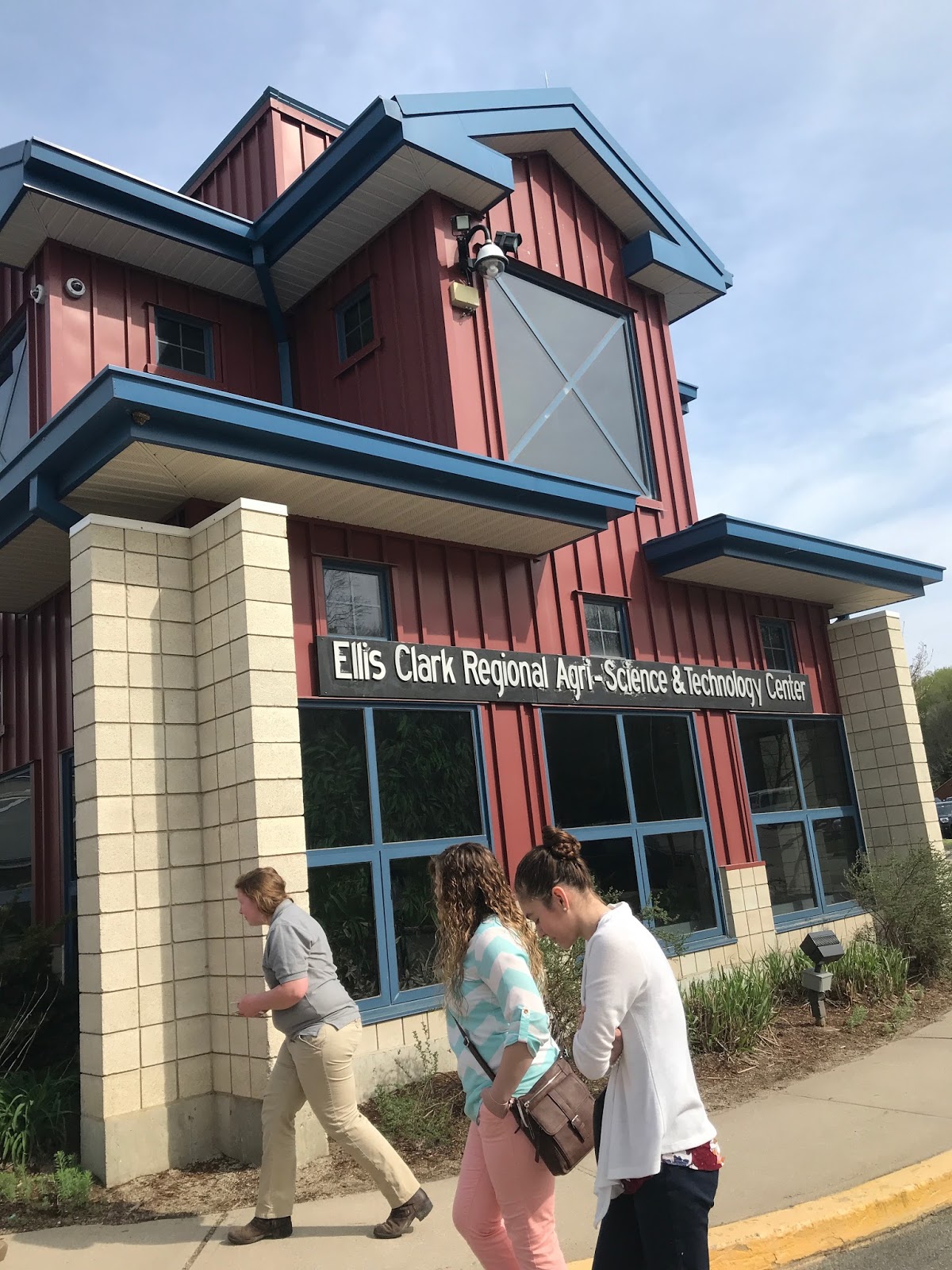
Connecticut has such a unique Agricultural Education system! The state is broken up into 19 regional school districts, where students have the opportunity to attend an Agricultural Science and Technology (ASTE) program within each one. All but one of these programs is a comprehensive program, meaning that they include the core subjects such as math, English, language arts, etc. Students, therefore, get the same experience as attending a “normal” high school while gaining tons of great options to get involved in agricultural education and FFA.
The first of these programs we visited was Nonnewaug High School in Woodbury, CT, which is in Region 14. I was absolutely blown away at all they do. The first thing about Nonnewaug that impressed me is that they’re a 10 teacher program! Each one teaches a single subject area, and because of this, they have the manpower to offer tons of different classes to their students from 23 different towns.
Tyler Cremeans (@TCMeansAgEd14), a fellow Penn State graduate of 2014 (participant of several past DSA trips) and aquaculture instructor at Nonnewaug, took us for a tour of the school's facilities where we got to hear from several other teachers. Students took us on a tour through just two of the several greenhouses on the property. The two that we got to explore were around for a while but really took off when Mr. Cremeans took over as the aquaculture teacher.
His students transformed the whole left
side of the greenhouse into an aquaculture facility complete with home-made fish tanks and filters, gravel plant beds, Nutrient Film Technique (NFT) tables, and Deep Water Culture (DWC) growing beds. Most of the food that is grown in their greenhouses is either sold, used for farm-to-table meals, or donated to local food banks in the area. The school offers a variety of curriculum that students can take, including:
Aquaculture
Floriculture
Natural Resource Management
Vet Sciences
Agricultural Production
Engineering
Horse Management
Landscaping
Culinary Arts
Local Food
We had an incredible lunch provided by the culinary program at the school, utilizing farm-to-table foods grown in the school's greenhouses and production facilities before we left for our next stop.
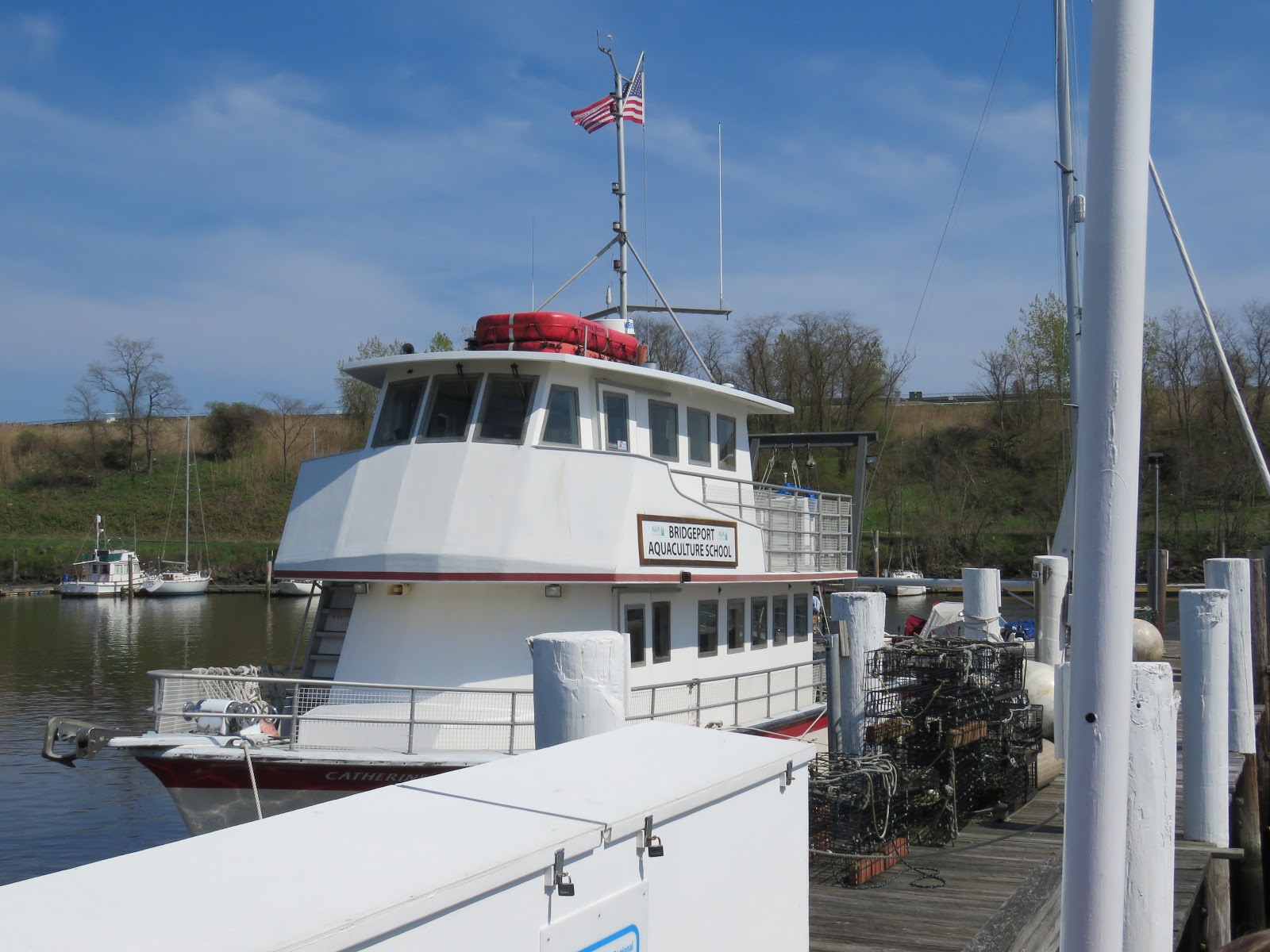
Next up, we were headed towards the coast to Bridgeport Aquaculture School, the only ASTE school in the 19 districts that is not a comprehensive program. This school is super unique in that it's completely focused on science and technology instruction as it relates to aquatic life.
Today I learned that being a super specialized school has its perks. The school not only has a boating simulation equipment, but it owns its own research vessel where students and instructors make the ocean their classroom! In addition to these amazing parts of their program, students also have some other great opportunities for their students to learn and develop skills applicable to a future involving aquatics.
The facility has a wood shop where they're able to learn how to build a boat from scratch or restore one, two labs with state-of-the-art equipment to learn how to analyze soil and water quality, and study advanced chemistry, and a full fish hatchery and nursery where they raise tilapia, coy, and lobsters. We got the chance to tour each of these areas and learn how students learn in such a unique type of school.
Bridgeport, being a specialized facility, offers lots of unique courses for its students, including:
Biology and Ecology
Marine Navigation and Map Reading
Marine Safety
Applied Physics
Engine Mechanics
Seafood Science
Aquaculture
Marine Energy
Bridgeport Aquaculture School was by far the most unique school I have ever visited! What really stuck out to me here was how this school is able to create meaningful learning out of the leisure and
industry that Bridgeport was built on. Boating, fishing, and other aquatic pursuits are obviously very economically important to Bridgeport, as well as culturally important. Bridgeport Aquaculture School recognizes that and gives students a chance to really dig into the science it all.
Throughout Day 1 we learned how New England agriculture programs are able to provide students with agricultural instruction in a unique context by catering to the interests of their students, relying on community support, bringing relevant industry and culture into the classroom, and thinking outside the box, just to name a few ways!
Check out the video reflection from today, and stay tuned for more guest blogs throughout the remainder of the week as we explore New England agricultural education on #TeachAgDSA18!
Bonus: Enjoy this picture of me trying to capsize a virtual boat because I was geeking out so much:
You can virtually-engage with this experience by reading and commenting on the daily blogs and following the experience on Twitter and Facebook with our hashtag #TeachAgDSA18.
Hunter Kauffman
Guest Blogger for 6th Annual DSA (#TeachAgDSA18)
Team Leader, @TeachAgPSU Communications