The incredible student success stories of the Penn State Agricultural & Extension Education Program! Creating Positive Agents of Change to make the world a better place!
We welcome guest bloggers and contributors. Email teachag@psu.edu for more information!
Editor's Note: What is a Domestic Study Away? A Domestic Study Away (DSA) is a non-credit experience where a group of students travel to a State to explore the following:
What does #AgEdu look like in other states? How is the total model of school-based agricultural education (Classroom Instruction, Youth Leadership Development <FFA> and Work-based learning <SAE>) uniquely provided?
Who are the #AgEdu Stakeholders in the state? Specifically, what agricultural industry is being served?
A unique yearly selected professional development topic! This year is a little bit different in that we will be striving to answer an inquiry each day as we explore agricultural education across New England. Each question connects to the big idea of diversity in agriculture.
You can virtually-engage with this experience by reading and commenting on the daily blogs and following the experience on Twitter and Facebook with our hashtag #TeachAgDSA18.
We could not complete this transformative learning experience with out the incredible support of our partners including: The Pennsylvania Association of Agricultural Educators, The Penn State Center for Professional and Personnel Development , and the Penn State College of Agricultural Sciences.
____________________________________
DAY 3: New Hampshire
We started our trip today with breakfast at Heritage Farm Pancake House. We enjoyed a family-style, farm-to-table breakfast. There were over 15 flavor choices including white raspberry, blue banana, birthday cake, and apple cinnamon. They had chickens, ducks, goats, horses and a friendly dog named Fern.
Before lunch, we toured Winnisquam Regional High School where #PSUAgEd14 member Mike Petrun (@PetrunMichaelG) is currently an agriculture instructor. We listened to and provided feedback to students completing their capstone projects. Their projects ranged from stone wall construction, horse driving, taxidermy, and forestry. Mr. Petrun is truly "Stationed by the Owl" as he gave the future agricultural educators his words of wisdom as preparation for their student teaching experiences in the spring of 2019.
In the afternoon, we had a tour of Pleasant View Garden's greenhouses and growing facilities. Mr. Huntington gave us a tour of the facilities at Pleasant View Garden, where they produce Proven Winner flowers, and herb plants. He helped us understand more of how their facilities run including the Ag Mechanic side of things like the wood chip burner to heat the greenhouses.
He also explained their drip irrigation system, and how it waters both their hanging baskets and their liners. He detailed how their shipping system works and how they are able to ship to various states up and down East coast. Mr. Huntington was kind enough to show us his hydroponic lettuce systems. He sells to both restaurants and local retailers.
Check out the video blog from day three and stay tuned for tomorrow's recap!
You can virtually-engage with this experience by reading and commenting on the daily blogs and following the experience on Twitter and Facebook with our hashtag #TeachAgDSA18.
Neve Consylman (@NeveConsylman), Member of #psuaged21
and
Nicole Guise (TwitterlessNicole), Member of #psuaged21
Guest Bloggers for the 6th annual @TeachAgPSU Domestic Study Away - #TeachAgDSA18
Editor's Note: What is a Domestic Study Away? A Domestic Study Away (DSA) is a non-credit experience where a group of students travel to a State to explore the following:
What does #AgEdu look like in other states? How is the total model of school-based agricultural education (Classroom Instruction, Youth Leadership Development <FFA> and Work-based learning <SAE>) uniquely provided?
Who are the #AgEdu Stakeholders in the state? Specifically, what agricultural industry is being served?
A unique yearly selected professional development topic! This year is a little bit different in that we will be striving to answer an inquiry each day as we explore agricultural education across New England. Each question connects to the big idea of diversity in agriculture.
You can virtually-engage with this experience by reading and commenting on the daily blogs and following the experience on Twitter and Facebook with our hashtag #TeachAgDSA18.
We could not complete this transformative learning experience without the incredible support of our partners including The Pennsylvania Association of Agricultural Educators, The Penn State Center for Professional and Personnel Development, and the Penn State College of Agricultural Sciences.
We made it today to Massachusetts to start another day of exploring Agriculture and Agriculture Education in New England. Our beautiful 76-degree day started with at Norfolk County Agricultural High School. This breathtaking school is situated on 300 acres of pristine agricultural production land. Norfolk boasts state of the art animal care and research facility, several barns and Ag arena, an American Kennel Club (AKC) grooming area, and a full diesel mechanic shop just to name a few. Norfolk employs cutting edge technology and well-trained professional teachers. Being made up 70 school districts and approximately 400 students, this school spares no opportunity for the advancement of their students. The time, resources and community support that have been built up over years of careful operation of the program have allowed for this school to flourish. Norfolk was definitely every agriculture teacher's hallmark desire.
Our second stop of the day was to ReVision Urban Farm; a community garden in downtown Boston. Their mission is to educate the community about where their food comes from and how they can help produce the food they eat. Afterward, we were able to explore the North End of the Boston Harbor and take in some sights and sounds for the evening. North End is a beautiful area with such strong national heritage and history. To top of this incredible experience, we had seafood dinner on the Boston Harbor at the Boston Sail Loft.
We are looking forward to the next few days! Follow us on our journey using #TeachAgDSA18, and check out our video reflection from today!
Ryan Rupert (@RyanRupert22),
Member of #psuaged19, Student Teaching at Greenwood HS (PA)
Megan Royer (@Megyyy22),
Member of #psuaged21, and
Beth Winklosky (@Winklosky_Beth),
Member of #psuaged19, Student Teaching at West Perry HS (PA)
Guest Bloggers for the 6th annual Domestic Study Away - #TeachAgDSA18 - New England!
What is a Domestic Study Away? A Domestic Study Away (DSA) is a non-credit experience where a group of students travel to a State to explore the following:
What does #AgEdu look like in other states? How is the total model of school-based agricultural education (Classroom Instruction, Youth Leadership Development <FFA> and Work-based learning <SAE>) uniquely provided?
Who are the #AgEdu Stakeholders in the state? Specifically, what agricultural industry is being served?
A unique yearly selected professional development topic! This year is a little bit different in that we will be striving to answer an inquiry each day as we explore agricultural education across New England. Each question connects to the big idea of diversity in agriculture.
You can virtually-engage with this experience by reading and commenting on the daily blogs and following the experience on Twitter and Facebook with our hashtag #TeachAgDSA18.
We could not complete this transformative learning experience with out the incredible support of our partners including: The Pennsylvania Association of Agricultural Educators, The Penn State Center for Professional and Personnel Development , and the Penn State College of Agricultural Sciences.
Penn State has officially arrived in New England! After hours of travel and an overnight stop in New York, we started our first day of #TeachAgDSA18 in Connecticut, where we attempted to answer the question...
How can we deliver secondary school-based programs in unique contexts?
There are so many exceptional experiences from today that I could talk about, but I’m just going to touch on the few that I thought were the coolest!
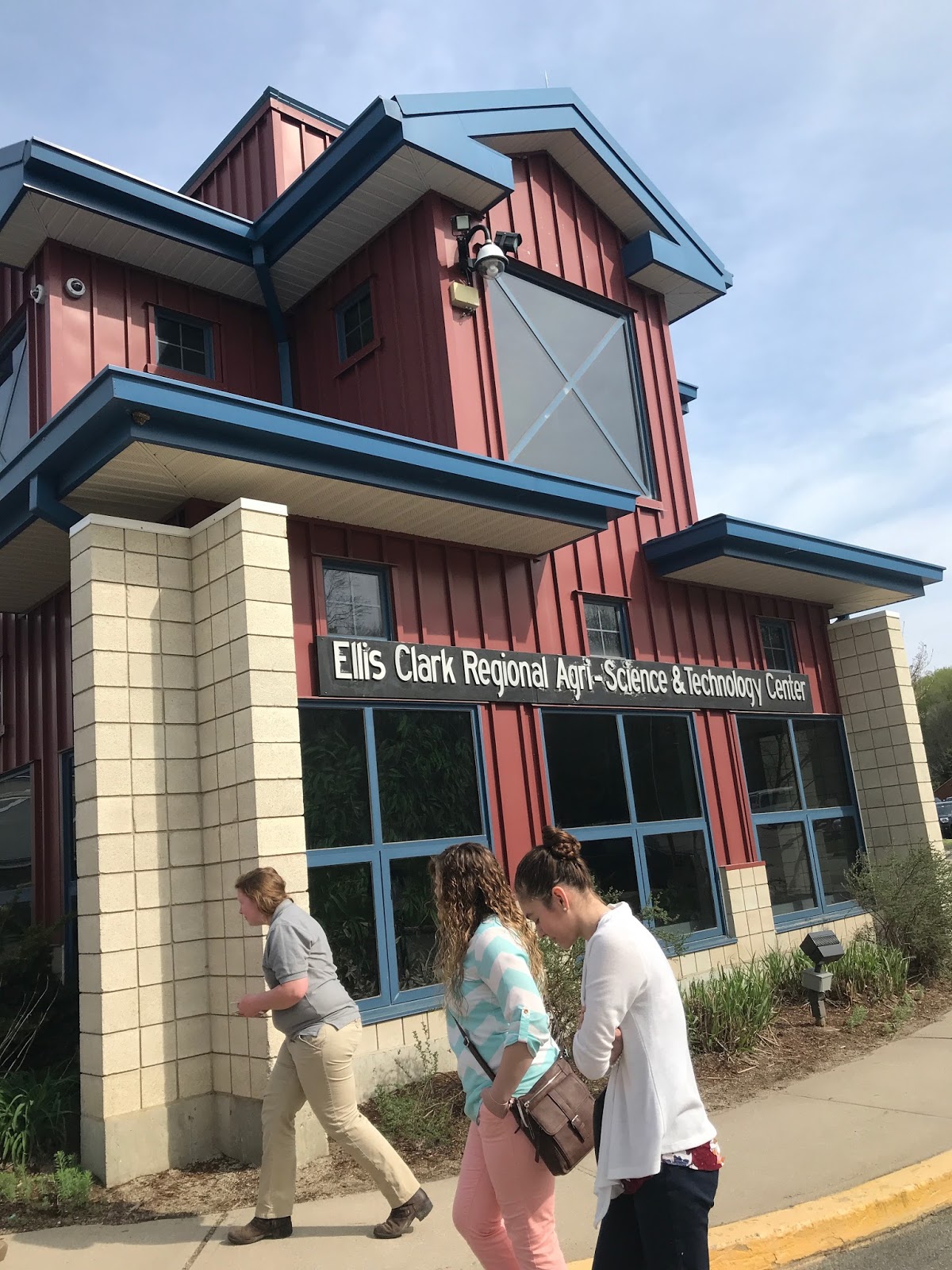
Connecticut has such a unique Agricultural Education system! The state is broken up into 19 regional school districts, where students have the opportunity to attend an Agricultural Science and Technology (ASTE) program within each one. All but one of these programs is a comprehensive program, meaning that they include the core subjects such as math, English, language arts, etc. Students, therefore, get the same experience as attending a “normal” high school while gaining tons of great options to get involved in agricultural education and FFA.
The first of these programs we visited was Nonnewaug High School in Woodbury, CT, which is in Region 14. I was absolutely blown away at all they do. The first thing about Nonnewaug that impressed me is that they’re a 10 teacher program! Each one teaches a single subject area, and because of this, they have the manpower to offer tons of different classes to their students from 23 different towns.
Tyler Cremeans (@TCMeansAgEd14), a fellow Penn State graduate of 2014 (participant of several past DSA trips) and aquaculture instructor at Nonnewaug, took us for a tour of the school's facilities where we got to hear from several other teachers. Students took us on a tour through just two of the several greenhouses on the property. The two that we got to explore were around for a while but really took off when Mr. Cremeans took over as the aquaculture teacher.
His students transformed the whole left
side of the greenhouse into an aquaculture facility complete with home-made fish tanks and filters, gravel plant beds, Nutrient Film Technique (NFT) tables, and Deep Water Culture (DWC) growing beds. Most of the food that is grown in their greenhouses is either sold, used for farm-to-table meals, or donated to local food banks in the area. The school offers a variety of curriculum that students can take, including:
Aquaculture
Floriculture
Natural Resource Management
Vet Sciences
Agricultural Production
Engineering
Horse Management
Landscaping
Culinary Arts
Local Food
We had an incredible lunch provided by the culinary program at the school, utilizing farm-to-table foods grown in the school's greenhouses and production facilities before we left for our next stop.
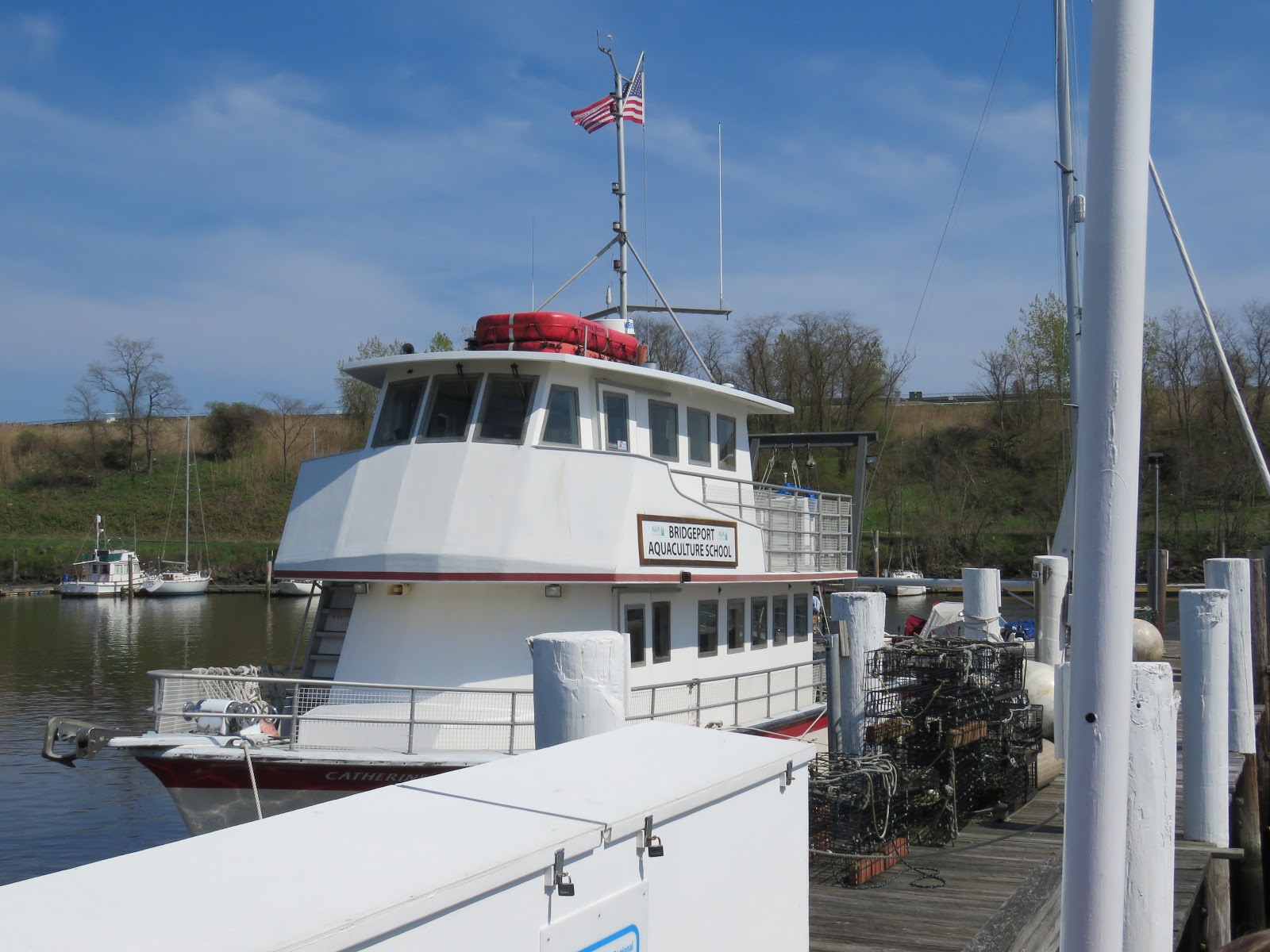
Next up, we were headed towards the coast to Bridgeport Aquaculture School, the only ASTE school in the 19 districts that is not a comprehensive program. This school is super unique in that it's completely focused on science and technology instruction as it relates to aquatic life.
Today I learned that being a super specialized school has its perks. The school not only has a boating simulation equipment, but it owns its own research vessel where students and instructors make the ocean their classroom! In addition to these amazing parts of their program, students also have some other great opportunities for their students to learn and develop skills applicable to a future involving aquatics.
The facility has a wood shop where they're able to learn how to build a boat from scratch or restore one, two labs with state-of-the-art equipment to learn how to analyze soil and water quality, and study advanced chemistry, and a full fish hatchery and nursery where they raise tilapia, coy, and lobsters. We got the chance to tour each of these areas and learn how students learn in such a unique type of school.
Bridgeport, being a specialized facility, offers lots of unique courses for its students, including:
Biology and Ecology
Marine Navigation and Map Reading
Marine Safety
Applied Physics
Engine Mechanics
Seafood Science
Aquaculture
Marine Energy
Bridgeport Aquaculture School was by far the most unique school I have ever visited! What really stuck out to me here was how this school is able to create meaningful learning out of the leisure and
industry that Bridgeport was built on. Boating, fishing, and other aquatic pursuits are obviously very economically important to Bridgeport, as well as culturally important. Bridgeport Aquaculture School recognizes that and gives students a chance to really dig into the science it all.
Throughout Day 1 we learned how New England agriculture programs are able to provide students with agricultural instruction in a unique context by catering to the interests of their students, relying on community support, bringing relevant industry and culture into the classroom, and thinking outside the box, just to name a few ways!
Check out the video reflection from today, and stay tuned for more guest blogs throughout the remainder of the week as we explore New England agricultural education on #TeachAgDSA18!
Bonus: Enjoy this picture of me trying to capsize a virtual boat because I was geeking out so much:
You can virtually-engage with this experience by reading and commenting on the daily blogs and following the experience on Twitter and Facebook with our hashtag #TeachAgDSA18.
Hunter Kauffman
Guest Blogger for 6th Annual DSA (#TeachAgDSA18)
Team Leader, @TeachAgPSU Communications
The 2015 Domestic Study Away took place in Mississippi,
where students visited a catfish farm (above), toured cotton
production, explored international trade at the Port of Gulf,
and more.
Since 2013, students from Penn State have traveled all across the country, racking up thousands of miles to explore the transformative nature of school-based agricultural education as it relates to communities, schools, and most importantly the lives of students.
This year we're excited to have the opportunity to send students to the New England area to explore the agriculture industry and school-based agricultural education with #TeachAgDSA18.
The Domestic Study Away program gives students a chance to broaden perspectives and immerse themselves in the vast diversity of agriculture in our own nation by hearing it directly from the source - a unique opportunity in itself. Typically each year includes industry tours, community engagement, meaningful discussion with peers from local universities, and a professional development focus in the area of school-based agricultural education.
To really capture the essence of the Domestic Study Away program, we invite you to browse through the past DSA experiences of current Penn State students and alumni:
2017 Domestic Study Away, #PSUAgEd2WI
Professional Development Focus:
Exploring gender within the agriculture industry, secondary Agricultural Education classrooms, and the Agricultural Education profession.
To learn more about starting on the path to having a career that makes a positive impact on the lives of students across the globe by becoming an agricultural educator, please contact the agricultural teacher education program at teachag@psu.edu. Follow us on Twitter at TeachAgPSU, on Facebook, or on our blog.
Editor's Note:What is a Domestic Study Away? A Domestic Study Away (DSA) is a non-credit experience that is 100% Student-Developed and Student-led. The Penn State Teach Ag! Society runs where a group of students travel to a State to explore the following:
1. What does #AgEdu look like in other states? How is the total model of school-based agricultural education (Classroom Instruction, Youth Leadership Development <FFA> and Work-based learning <SAE>) uniquely provided?
2. Who are the #AgEdu Stakeholders in the state? Specifically, what agricultural industry is being served?
3. A unique yearly selected professional development topic! For #psuaged2WI, it is "Gender in the Agriculture Industry, Agricultural Classroom and Agricultural Education Profession.
You can virtually-engage with this experience by reading and commenting on the daily blogs and following the experience on Twitter and Facebook with our hashtag #PSUAgEd2WI. We could not complete this transformative learning experience with out the incredible support of our partners including: The Pennsylvania Association of Agricultural Educators, The Wisconsin Team Ag Ed, The Penn State Center for Professional and Personnel Development and the Penn State College of Agricultural Sciences Student Activities Fund.
This is a series of blogs capturing reflections from each day of the experience by one of the participants. Below is the sixth day reflections of Macy Fisher (@macy_fisher), a member of the #psuaged18 cohort. Macy will be completing her student teaching internship with Ms. Valerie Fry of the Selinsgrove Agriscience Program in Selinsgrove, Pa. The reflection focus is the sixth official day of DSA visiting LaClare Dairy Goat Farm, Bonlander Furs Mink Ranch, an afternoon full of service learning projects and finishing the night at a Wisconsin Supper Club.
Clara Hedrich, retired from #AgEdu after 39 years and owner of LaClara Farm
On Saturday May 13th, we began our daily adventures at LaClare Dairy Goat Farm which is owned by Larry and Clara Hedrich and four of their children. The farm began in 1978 when they purchased 22 acres to start a small dairy goat herd for their children to show through 4-H. After Larry working in construction and Clara teaching Agriculture Education for 39 years, they decided to stay home and expand their operation. In 1996, they decided to purchase milking machines and in the following years kept adding more and more to their farm. In 2008 was when their very first batch of cheese was created named Evalon. This cheese won LaClare Farms their very first award as the United State Champion Cheese, raising above all other dairy and goat cheese to take the title. Each of their children were given the same opportunity to return to the farm however they had to first receive a college education and then work for someone else for 2 years before they could return home. This is when they had their son, Greg, and three of their daughters, Anna, Jessica, and Kate, all realized that they wanted to come back home and make their farm flourish. In 2012, ground was broke at their current location where they have the milk facility, retail store, and all the equipment to produced their cheeses as well as the holding barn for their milking herd of 900 goats. The head consists of 4 different breeds of goats: Nubians, Alpines, Saanen, Toggenburg. For every 1 cow that a dairy farm milks, it takes 10 dairy goats to milk the equivalency. Before heading to our next destination, Clara left us with some things to reflect on. “Work smart and always be on the cutting edge that way you are known for something but don’t try to come in on your first day of teaching a try to save the world, ease your way into the back door. Ag teachers are unique, we get to do what we teach, how many English teachers have published a book?”
As we thought about what Clara had told us, we traveled not far down the road to the Bonlander Furs Mink Ranch. This is a family ran mink ranch that started in 1978. They originally had a chicken operation, however the mink farms in the surrounding areas would have an occasional mink get loose which would travel to the chicken farm in search of food. After catching several of the these wandering minks and talking to other local mink ranchers, the Bonlander’s decided to try their hand at raising minks. This made them the 5th mink farm in an 8 mile radius.
The farm currently has 850 females all of which have just had babies. Minks can have anywhere between 3 and 14 babies! Each mink is kept in its own separate cage with a nesting box for their babies. Babies are born with no hair and are about the size of a pinkie finger; they quickly grow to be chubby, furry babies who can be separated from their mothers after 6 to 8 weeks. The most valuable pelts will be found on minks that are are up to 2 years in age. The pelts are sold on average for $40/pelt at an auction in Canada where most are bought by China to be made into mink coats, jackets, hat and other various clothing. It takes on average 50 male pelts or 90 female pelts just to make one jacket that will be sold for $10,000.00! Minks are also so used for musk and colognes and also water proof oil used on boots and leather. All of us were amazed by this unique industry and learned that Wisconsin is the number one producer of mink in the United States!
In the afternoon, we headed to the local church to start our Service Learning Activities. We started by learning about the Holyland Food Pantry. The church used the empty parsonage building and set up the pantry like a store. Local businesses donated shelving, refrigerators, and freezers as well as many food products. There are also several donation locations where community members can drop off any food that can be used at the pantry. Donations can also be given through the mail carrier. Every house is given a bag that can be filled and then hung on the mailbox which is then brought to the pantry. Local farmers also give ground beef, milk, eggs and butter that families can take. Anyone is welcome to come each month to the “shopping day” where families are given a number and are called one at a time to shop individually. The pantry is always in need of donations, especially bottled water and will always accept a helping hand to volunteer.
We also learned about the Pens for Hens project which was started as by the local FFA members. They used the idea for the National Ag Sales contest where chicken pens would be build in Haiti using the metal and wood scraps that are readily available in the small towns and villages. The idea flourished and now local chapters build their own pens and auction them off. The proceeds are then sent to Haiti for villages to continue to construct pens. We also learned from a town carpenter about how to construct a lending library. He taught us the tricks and tips of how to construct these small boxes that serve as a library. The kids in the community can come and take a book to read and return it or any other book back to the library.
The interesting service learning project was the final one of the day where we were helping to restore the cemetery. Some of us were using Ammonia and soapy water to clean old head stones that you could not longer read, while others were helping to unearth fallen headstones that were buried in inches of soil. The stones were the placed in a bed of pebbles and cleaned. Many of us were inspired by this project and knew that we wanted to do the same process at cemeteries back home. We ended our day by going to a Wisconsin Famous Supper Club. None of us had ever experienced a Supper Club before and were not sure what to expect. This is a long time tradition in Wisconsin and we had to go to one before we left! The Supper Club we attended was Jim and Linda’s Lakeview Supper Club which sits right on the edge of Lake Winnebago. We were able to mingle and converse with many of the people we had met during our week thus far including our superstar hosts who planned our week and connected us with each stop of our DSA trip. After enjoying our meals, some of our group decided to climb the tower that sits outside the Supper Club. From the top, you have an amazing view out over the lake. As the evening came to an end, our group decided to sit and watch the sunset on the lake. We had a time to just sit, think and reflect on how far we had come in the short week. It was a peaceful and relaxing way to end the day.
Day 6 gave us a new outlook on what our students and programs can do for our communities and how to serve others. I stand by the saying of many hand make little work, and today as instilled that in each of us. We all are refreshed and full of bright new ideas of how as an Agriculture Educator we can help our students to become helping hands in the world. We would like to thank everyone who mad our day successful and are grateful of the stories and advice shared with us though out the day!
Check out our Day six video created by Lisa Boltz (@BoltzLisa). Lisa is a member of the 2019 teacher cohort at Penn State (#psuaged18).
TO READ MORE ABOUT OUR#PSUAGED2WI ADVENTURES, SEE:
Editor's Note:What is a Domestic Study Away? A Domestic Study Away (DSA) is a non-credit experience that is 100% Student-Developed and Student-led. The Penn State Teach Ag! Society runs where a group of students travel to a State to explore the following:
What does #AgEdu look like in other states? How is the total model of school-based agricultural education (Classroom Instruction, Youth Leadership Development <FFA> and Work-based learning <SAE>) uniquely provided?
Who are the #AgEdu Stakeholders in the state? Specifically, what agricultural industry is being served?
A unique yearly selected professional development topic! For #psuaged2WI, it is "Gender in the Agriculture Industry, Agricultural Classroom and Agricultural Education Profession.
You can virtually-engage with this experience by reading and commenting on the daily blogs and following the experience on Twitter and Facebook with our hashtag #PSUAgEd2WI. We could not complete this transformative learning experience with out the incredible support of our partners including: The Pennsylvania Association of Agricultural Educators, The Wisconsin Team Ag Ed, The Penn State Center for Professional and Personnel Development and the Penn State College of Agricultural Sciences Student Activities Fund.
Below is a reflection by George Dietrich (@TheGeorge4H), a member of the #psuaged18 cohort. George is a dual major in Agricultural and Extension Education and Food Science at Penn State, and he will be completing his student teaching internship with Ms. Darla Romberger (@DJR_131) of the Cumberland Valley Agriscience Program (@CV_Agrisciences) in Mechanicsburg, PA. The reflection focus is the eighth and final official day of the Domestic Study Away.
Our morning started bright and early in the state of Wisconsin where we loaded the van and headed to visit Big Foot High School in Walworth, Wisconsin. Here we had a chance to visit with #PSUAgEd14 Alumni Jeanne Case (@J_Case) and the rest of Big Foot's Agricultural Education team! Immediately we paired up with students in her class, went out to the green house, and learned about their current lab. Each student was able to choose what and how they would conduct their research project, as long as it met certain criteria. Talk about student ownership!
We also had the chance to talk with Ms. Case and Ms. Konke about their experiences teaching. The Big Foot Agriscience program is very strong and teaches students a variety of technical science skills along with critical thinking skills that comes from inquiry based learning. It was impressive that these students were already gaining experience with micropipettes and electrophoresis units. Non traditional SAE projects were also prevalent at Big Foot. In fact, one student was researching a way to bind certain proteins in peanuts so people with peanut allergies can eat them!
After saying goodbye to Jeanne at Big Foot High School, we headed on down the road to Pontiac Township High School in Illinois to visit Mr. Parker Bane (@ParkerBane) and Mr. Jesse Faber (@therealjfaber). We had a very productive discussion on plans after high school with his senior landscaping class, and then led some fun leadership activities with his Intro to Ag class. The entire school was having an assembly that day, so we got to go and watch student be recognized for all of their had work and accomplishments. It was really nice to see, wouldn't it be great if all schools took the time to thank their students?
Following the assembly and a tasty ice cream treat, we had the chance to talk to Parker and Jesse about the joys and struggles of being a multi teacher program. We discussed a plethora of topics and it was really nice to have an open, honest conversation. To be a good teacher, it's all about the relationships you build with your students (can someone say van ride memories?).
Jesse took us out to Mackinson Dairy Farm to meet with his wife, Mary. Mary is a Controller of a local cooperative and also manages her family farm's social media presence. We learned about how important it is to maintain a professional presence as an agricultural advocate on social media. Mary did a great job connecting her knowledge of social media back to how we can implement and manage a social media presence for an Agricultural Education program!
TO READ MORE ABOUT OUR#PSUAGED2WI ADVENTURES, SEE:
What is a Domestic Study Away? A Domestic Study Away (DSA) is a non-credit experience that is 100% Student-Developed and Student-led. The Penn State Teach Ag! Society runs where a group of students travel to a State to explore the following:
What does #AgEdu look like in other states? How is the total model of school-based agricultural education (Classroom Instruction, Youth Leadership Development <FFA> and Work-based learning <SAE>) uniquely provided?
Who are the #AgEdu Stakeholders in the state? Specifically, what agricultural industry is being served?
A unique yearly selected professional development topic! For #psuaged2WI, it is "Gender in the Agriculture Industry, Agricultural Classroom and Agricultural Education Profession".
You can virtually engage with this experience by reading and commenting on the daily blogs and following the experience on Twitter and Facebook with our hashtag #PSUAgEd2WI. We could not complete this transformative learning experience without the incredible support of our partners including: The Pennsylvania Association of Agricultural Educators, The Wisconsin Team Ag Ed, The Penn State Center for Professional and Personnel Development and the Penn State College of Agricultural Sciences Student Activities Fund.
This is a series of blogs capturing reflections from each day of the experience by one of the participants. The goal is to post the daily reflection 24 hours after completion of activity. Below is the final reflection prepared by Rosalind Cowan (@cowan_rosalind), a member of the #psuaged18 cohort and the 2017 Domestic Study Away Chair.
As I sit on campus in Happy Valley, my mind and heart are just overflowing with newfound knowledge and gratitude. For the past 9 days, we have been traveling all over the state of Wisconsin engaging with rock star Ag Ed programs and agriculture industry partners. We grew both personally and professionally as we explored our professional development focus of Gender in the agriculture industry, secondary Agricultural Education programs, and the Agricultural Education profession. It has been a whirlwind of a trip, but I think I can speak for all of us when I say that this year’s Domestic Study Away to Wisconsin has been full of inspiration, new friends, impactful growth, and last but not least, a ton of cheese curds.
#PSUAgEd2WI Fast Facts!
1. 9 days
2. 8 students (7 students from #psuaged18, 1 student from #psuaged19)
3. 1 van
4. 6 states (PA, OH, IN, IL, WI, MN)
We reached America's Dairyland
5. 8 primary/secondary Agricultural Education Programs: East Tech HS, Holmen HS, New Richmond HS, School for Agricultural and Environmental Studies, Randolph HS, Kewaskum HS, Big Foot Union HS, and Pontiac Township HS.
6. 11 Teach Ag Stars with OVER 220 YEARS OF COMBINED TEACH AG EXPERIENCE: Jeremy Grove, Roger King, Rachel Sauvola, Sheri Hicken, Keith Gundlach, Dave Rizzardi, Jeanne Case, Lori Schmitz, Jesse Faber, Parker Bane, and Linda Sattler.
7. 10 Ag Ed Related Partners: University Wisconsin – River Falls, Wisconsin Farm Bureau, Madison College, Holyland Food Pantry, St. Paul's Church, Pens for Hens, iCEV, Stewart-Peterson AgEd.net, Wisconsin FFA Foundation, and the Wisconsin Department of Public Instruction.
8. 11 Industry Partners: Wetherby Cranberry Co., Accelerated Genetics, Foremost Farms, Culver’s, Jung Seed, Mackinson Dairy, LaClare Farms, Bluestream Bison Farm, Second Look Holsteins, and Bonlander Furs Mink Ranch.
While reflecting on our adventures and reflections we had each day, I am overwhelmed by how much we experienced and learned. The impact of this year’s Domestic Study Away extends far beyond the opportunity to experience Agricultural Education and the agriculture industry in another state. Take a look at our other blogs from this week to gain even more insight on our day-to-day experiences. Overall, here are four important themes from this year’s Domestic Study Away that will hopefully help you understand the power of #PSUAgEd2WI.
Four Important Take Aways from #PSUAgEd2WI
1. Ag Ed is for EVERYONE, and as teachers, we are responsible for creating that culture and environment for our students.
Learning about urban culture at East Tech HS
Whether we are talking about gender, race, or religion, we learned on this trip that the Agricultural Education teacher plays a central role in developing and maintaining a learning environment that is welcoming and supportive to all. At East Tech FFA with Jeremy Grove and his students, we learned about cultural differences and how to make FFA cool for everyone! One quote really stuck out when discussing minority and urban populations in FFA: “Instead of trying to always immerse us in your culture, immerse yourself in ours”.
Discussing gender in Ag during our LGBTQ Panel
Then, at Madison College, we had the chance to have a respectful, honest, and insightful panel discussion with five LGBTQ+ individuals. They volunteered their time to come and discuss their experiences being an LGBTQ+ individual, both in their careers in the agriculture industry and their experiences in secondary classrooms. We learned the importance of recognizing all students as individuals, not tolerating any derogatory comments between students, and not gender labeling activities (such as having only boys do jobs that involve lifting). Here are some wise non-negotiable rules for our future classrooms: “As a student, you can’t: Risk Lives, Risk Grades, or Risk self-esteem/self-worth”.
2. Community is INVALUABLE, just ASK.
Culver's supports agriculture and local FFA chapters
As new and upcoming teachers, I think sometimes we feel like we have to do it all, whether it is because we feel like we have something to prove or aren’t sure how to get help. However, there is simply no reason to feel this way! Every teacher we visited told us how they created relationships and engaged their community around the Ag Ed program: Be INVOLVED both in and outside of the Ag Ed program and JUST ASK. A secondary Agricultural Educator only has so much time and energy, which is where community involvement plays a huge role. We got to meet with community members and FFA Alumni chapters at many of the programs we visited, as well as engage with Ag Ed related partners, and it was both inspiring and touching to see the relationships between the Ag teacher and their community.
3. Student Ownership, Student Voice, and Autonomy are Key to Student Success
Students rock their lesson at their Food for America event
From the beginning to the very end of our trip, we witnessed the value of students having ownership in their work at every place we visited. We learned the importance of each student having a niche or area within the program that they managed, instead of being involved with everything. This way, students made these projects or events their own and took pride in the work that they did. In the classroom, learning was inquiry based and promoted intrinsic motivation as well as confidence. We even got to try our hand at facilitating an inquiry based lesson! It was a great opportunity and we gained a lot from the students’ feedback.
We even got to experience the benefits of giving students ownership personally. We participated in service learning by helping Lori Schmitz and her husband restore and clean headstones at a local cemetery. Lori was an excellent educator; her passion combined with giving us ownership in the work that we accomplished made us passionate and excited about the work we were doing.
4. #TeachAg is one big Family
Learning how to clean and restore a cemetery
There are no words to express just how thankful we are for everyone we met and engaged with in WI. It seemed like the whole state welcomed us all week long! The kindness and hospitality we experienced throughout our trip was out-of-this-world and we enjoyed being able to get to know everyone. Windshield time turned into an opportunity for participants to talk one-on-one with our hosts for each day, and I know that we all made connections that will last much longer than those 9 days we were in WI.
Hanging out with our Ag Ed friends at UW River Falls!
Last but not least are the close bonds that you form with your fellow Ag Ed majors when you spend 9 days straight together in hotels and 1 van. You grow, learn, and laugh together, and by the end of the trip you feel like family. DSA helps you realize how thankful you are to have each and every participant be part of your #TeachAg journey.
Ag Ed students who travel together, stay together
Our 5th annual DSA trip to Wisconsin was definitely one to be remembered. Once again, thank you to all of our partners for helping make this trip such a success: The Pennsylvania Association of Agricultural Educators, The Wisconsin Team Ag Ed, The Penn State Center for Professional and Personnel Development and the Penn State College of Agricultural Sciences Student Activities Fund. The future of Agricultural Education is bright!
If you are interested in partnering with us in 2018, or would like to be considered as a 2019 destination, please contact me at rvc5334@psu.edu or our advisor, Dr. Daniel Foster at foster@psu.edu
TO READ MORE ABOUT OUR #PSUAGED2WI ADVENTURES, SEE:
 You can virtually-engage with this experience by reading and commenting on the daily blogs and following the experience on Twitter and Facebook with our hashtag #TeachAgDSA18.

 In the afternoon, we had a tour of Pleasant View Garden's greenhouses and growing facilities. Mr. Huntington gave us a tour of the facilities at Pleasant View Garden, where they produce Proven Winner flowers, and herb plants. He helped us understand more of how their facilities run including the Ag Mechanic side of things like the wood chip burner to heat the greenhouses.
  He also explained their drip irrigation system, and how it waters both their hanging baskets and their liners. He detailed how their shipping system works and how they are able to ship to various states up and down East coast. Mr. Huntington was kind enough to show us his hydroponic lettuce systems. He sells to both restaurants and local retailers.