Showing posts with label Allison Hoover. Show all posts

Sunday, May 4, 2014

Allison Hoover (@allihoov), Inaugural AgriCorps Volunteer! #Liberia


Allison Hoover
The semester is wrapping up, student teachers are coming back to Penn State, and graduates are on the hunt for jobs! One student however, knows exactly what she is doing and it is a lot different than what most normal graduates would do! Allison Hoover (@allihoov), has been hired to be one of twelve, first time volunteers to work with AgriCorps in Liberia for a year!
For as long as Allison can remember, she has wanted to travel. She has studied abroad in Costa Rica and has traveled to Thailand and Cambodia which have all opened her eyes to new opportunities and has prepared her for this experience. When she was hired by AgriCorps, she discovered that she would be working in Liberia. Liberia is a small country (about the size of Pennsylvania) located in the western coast of sub-Saharan Africa.


The volunteers will be placed in different villages in Bong County which is northeast of the capital city of Monrovia. The mission of AgriCorps is to serve the impoverished and food insecure communities of Liberia by empowering youth with agricultural education. Allison will be working with local secondary schools teaching science with the agricultural content. They will be serving as experts in youth leadership and development by designing 4-H clubs, be developing school gardens, and design programs to empower the youth in skills that would be similar to an SAE experience.

Allison is looking forward to seeing Africa in all of its beauty! It has so much cultural history and geographic diversity that she can’t wait to immerse herself in it. She also realizes that it will be a lot different than what she is used to. The challenges with not having any family or friends there, no running water, or luxurious comforts for a whole year will be hard, but she knows that it is the right plan for her. “One thing I learned in my student teaching experience is that I love teaching kids… especially in the setting of agriculture education. There are countless beautiful souls in this world, and I will get to meet, grow, and establish friendships with them.”

Allison is going to do great things in the future and through her hard work and passion, she is going to make an impact in every life that she touches in Liberia! We all at Penn State wish her luck in her success and can't wait to hear the amazing stories that she will bring back home with her! Congratulations Allison!

If you would like to learn more about what the AgriCorps has to offer, and if it is right for you, please click on the provided link or check out this blog!

To learn more about starting on the path to having a career that makes a positive impact on the lives of students across the globe by becoming an agricultural educator, please contact the agricultural teacher education program at teachag@psu.edu. Follow us on Twitter at TeachAgPSU, on Facebook, or on our blog! 


Olivia Murphy-Sweet
Student Blogger
Teach Ag! Avenger

Twitter Handle @OSweetMurph
2016 Agricultural Education Student Teacher 

Wednesday, December 11, 2013

2014 Student Teachers (#psuaged14) reflect on their Micro Teaching Experience at Central Mountain

A front view of the high school. Photo Creds: Chris Knight,The Patriot-News
A few weeks ago the 2014 student teaching cohort traveled to Central Mountain Area High School to apply what they have been learning throughout the semester. It was an interesting time for most, being able to see what worked and what didn't work, with all the theories and practices we have been learning throughout the semester. During the three day teaching period, we approached the situation recognizing that we had free use of trial and error to see how our theories worked, and if they didn't, we would never have to go back there or see the students again. We have been working a lot this year to have a growth mindset. Part of that is to take what you did well and what you did badly and learn from it. Change the bad in the future and grow from the experience. Nothing is a bad experience; it is always a learning experience that can help push you in the right direction.

As my cohort reflects on our experiences at Central Mountain, here are some of the things that we did well and others that we need to improve on.

Valerie Laub prepares for a class

Meagan Slates was happy with her student teaching experience! To challenge herself, she taught a welding class where students completed a hook project. Meagan started in the classroom the first day to really go over what they were doing and why its important. On the second day, she broke the class into three groups so they would be able to travel around the shop, complete their project in smaller groups and be safer. Meagan demonstrated at each station and asked many questions to make sure that the students really knew what was going on.  She could tell they were getting a little annoyed with all the questions, but she wanted to make sure everyone stayed safe. On the the third day, the students actually got to work at the stations and everything went well. Overall, Meagan was really happy with how her micro teaching experience took place and is excited for her future plans of student teaching. You can read her blog here.


Allison Hoover facilitating an activity outside

Allison Hoover ended her blog with some “concepts for success” such as: to set the stage by creating a felt need for the content, don’t second guess yourself, keep directions clear and concise, and to ask high order questions to get them thinking. She also said "teach for many years.. then maybe you’ll get it down".

I completed student teaching on Wildland Forest Firefighting. I had a class of nine senior boys and really enjoyed working with them. However, I did not keep them engaged enough. It was a very interesting experience as each day the class responded differently.  On the first day they talked too much, while on the second day, a student fell asleep.  On the last day, I had a really awesome bellwork and interest approach but lost their attention as the class went on. I learned many lessons for my future student teaching experience like carrying out lesson plans and teaching from PowerPoints, but especially preparation. Preparation is everything and can really help you out. I was really prepared with the stuff that I had since I brought some equipment that the firefighters really use, but I did not have enough engaging activities and I kept losing my students. However, this is a learning experience and it served its purpose as I learned a lot and I will improve in the future.

My student teaching cohort all had good experiences and learned a lot during our time there. We were able to learn from this experience and change things for our LifeKnowledge lesson at our cooperating school that we are student teaching at. Teaching is one of those things that just takes a while to become good at. It takes a while to come to a point that you feel comfortable and this is something that people really need to keep in mind. You cannot enter the field thinking you will be perfect right away. You need to give yourself room to grow.

To learn more about starting on the path to having a career that makes a positive impact on the lives of students across the globe by becoming an agricultural educator, please contact the agricultural teacher education program at teachag@psu.edu. Follow us on Twitter at TeachAgPSU, on Facebook, or on our blog!


Jeanne Case
Student Blogger
2014 Dover HS Student Teacher
Twitter: JRose_Case

Wednesday, August 28, 2013

EARTH to ALLI. Alli to EARTH.

So what did I do this summer? Well there were many small things involved, but the big picture event was a semester of study abroad at EARTH University in Costa Rica. I just got home on Saturday from 4 months of being out of the country and am still processing all of the outstanding opportunities I was blessed with!

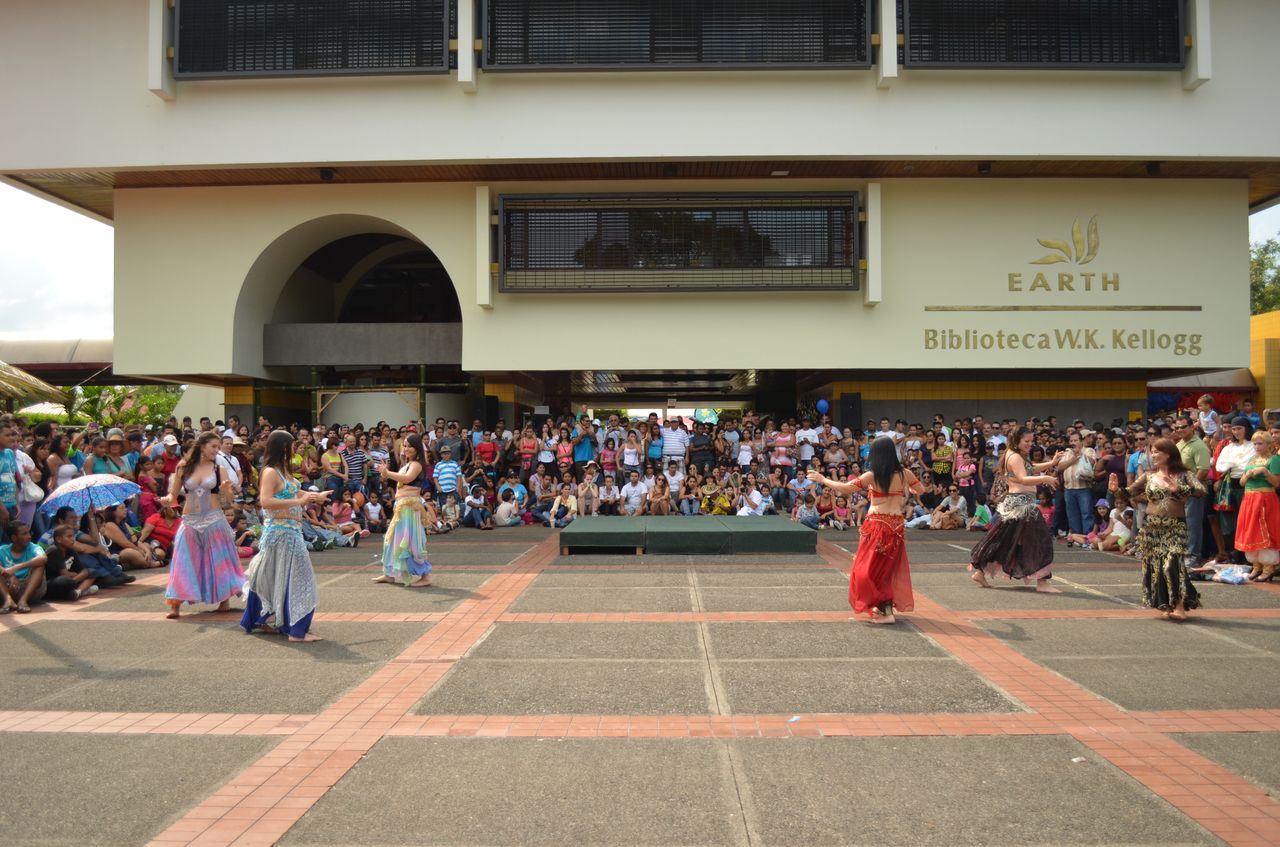
EARTH's cultural diversity was one of my favorite things.
This is from the Multicultural Fair that was held at the beginning of the summer... dances from all over, and amazing food!
The first time to ever use a machete... to cut down a whole plot of plantain plants!
EARTH University is an international private agricultural university, whereas the acronym EARTH stands for (translated from Spanish): agricultural education in the region of the humid tropics. This beautiful university, located on the Atlantic side of Costa Rica, is home to 400 students (over 4 years) who come from over 30 countries in Africa, Latin America and the Caribbean.  I was studying alongside students for one of their three trimesters and just got a snapshot of what it was like to be a student at this incredible institution. Students take every kind of agriculture class imaginable and also must complete a full-year business project, semester-long international internship, and graduation research project (similar to a thesis). They also have 2 days of work experience each week, in addition to their 4 days of classes with lab and field experience. It is definitely a “learning by doing” institution!!

Not a common PSU sight - sheep grazing on the lawn by the soccer field! 
So what did I do there? Well, firstly, I took the following courses to be used for PSU credit: tropical animal production, food security and world economy, community development work experience, mechanical skills (aka shop class), ecological basis for natural resource management, and an oral communication class. Within the first week of class, we were each assigned to maintain a 36 square meter plot of forages in my animal production class, got started on a semester-long project for my natural resources class, and were doing community diagnostics to prepare for working with rural, low income farmers (in my work experience).


Me and my 36 m2 forage plot for an animal production class!

Talking with our agricultural family after lunch one day in the community!

While I was able to gain a lot of new practical experiences (i.e. using a machete for the first time), I would say that the most beneficial component of my international experience was definitely the PEOPLE! God was faithful in providing a beautiful community for me at EARTH and I now have friends from all over the world – from Nigeria to Costa Rica, Mexico to Brazil, and several countries in between. I personally love cultural diversity, so I would often get excited when I realized that a group of X number of friends hanging out would represent X number of countries. Realizing the language diversity of EARTH is also so interesting to me! But let’s not forget to mention that my Spanish speaking skills greatly improved (even causing slight English speaking deterioration at times), as all of my classes were in Spanish!
My EARTH family - friends representing 8 different countries!!
So academic, cultural, and language development were up there on the beneficial experience list. But let’s not forget the travel opportunities! I had a few free weekends to travel around the gorgeous country of Costa Rica during my study abroad, only after a full week of vacations along the pacific coast with my parents (before the semester started). Traveling in Costa Rica included: carpooling, buses, taxis, rental cars, and walking... walking only because it was the means of crossing the Panama border when I needed to renew my passport visa! I was able to see gorgeous beaches in Guanacaste, go white water rafting with my natural resources class (best field trip ever), and spend a few weekends with my Turrialba families (from an immersion experience in Costa Rica last summer).

Favorite travel pic - gorgeous sunset in the Pacific

Thiago (Brazil) and Timothy (Nigeria) took me to some cool national parks!
While this experience was probably the best of my life, I won’t deny there weren’t some struggles. About half way through the summer, I was getting a bit homesick, but I think that was mainly exacerbated by the plethora of tropical bugs (like cockroaches in my dorm room – not a fan), humidity (some mold on my clothes) and class work stress. Spanish speaking language barriers were not too big of a problem for me, thanks to the previous Spanish speaking experience I had when living in Costa Rica last summer (and many years of high school Spanish). But in the end, the benefits and blessings of my time there were what will always remain – and without struggles, how will we grow?

So how can I conclude this incredible, life-changing experience? Well I don’t think I can ever conclude the friendships made, but I will leave you with some interesting numbers to ponder:
  • 17 weeks away from home
  • 29 hours a week of classes and work experience
  • 36 square meters of forages to plant and maintain
  • 14 cockroaches killed in my dorm room
  • 10 hand blisters
  • 1 parrot bite, 1 unknown rash, 1 bamboo splinter rash, 1 case of cold/bronchitis
  • 3 weekend trips to my Turrialba home
  • 2 weekend trips to the other side of the country (Guanacaste)
  • 1 semi-complicated trip to the Panama border
  • 2 overnight camping trips
  • Over 900 photos on my phone
  • Over 3,700 photos on my camera...
  • 10 visits to our rural agricultural community (El Triunfo)
  • Countless mosquito bites
  • Numerous unforgettable friendships
  • A lifetime of memories
If you want to learn more about my incredible experience and maybe see a bit more of EARTH university and its people, check out my blog from the summer!

To learn more about starting on the path to having a career that makes a positive impact on the lives of students across the globe by becoming an agricultural educator, please contact the agricultural teacher education program at teachag@psu.edu. Follow us on Twitter at TeachAgPSU, on Facebook, or on our blog!


Allison Hoover
Guest Student Blogger
2014 Wellsboro HS Student Teacher
Twitter: @allihoov

Friday, July 12, 2013

2014 PSU Student Teacher Allison Hoover wins Phi Kappa Phi Award!

2014 Student Teacher  Allison Hoover of Port Matilda, Pa., recently was awarded a Study Abroad Grant worth $1,000 from The Honor Society of Phi Kappa Phi--the nation's oldest and most selective collegiate honor society for all academic disciplines. Hoover is one of 50 students nationwide to receive the award.

Currently a senior majoring in agricultural and extension education at Pennsylvania State University, Hoover will use the grant to help in completing a portion of her student teaching internship in in Environmental Sciences in Costa Rica. Hoover will also be completing a portion of the student teaching in the Wellsboro Agriscience Department in Wellsboro, PA with PSU Alum Ms. Melanie Berndtson.

Phi Kappa Phi Study Abroad Grants are designed to support undergraduates, both members and nonmembers, as they seek expanded knowledge and experience in their academic fields. Since the program's inception in 2001, the Society has awarded more than $500,000 in Study Abroad Grants. Founded in 1897, Phi Kappa Phi is the nation's oldest and most selective collegiate honor society for all academic disciplines. Phi Kappa Phi inducts annually approximately 32,000 students, faculty, professional staff and alumni. The Society has chapters on more than 300 select colleges and universities in North America and the Philippines. Membership is by invitation only to the top 10 percent of seniors and graduate students and 7.5 percent of juniors. Faculty, professional staff and alumni who have achieved scholarly distinction also qualify. The Society's mission is "To recognize and promote academic excellence in all fields of higher education and to engage the community of scholars in service to others." For more information about Phi Kappa Phi visit www.PhiKappaPhi.org.

To learn more about Allison's adventures, read her blog at: http://allihoov.blogspot.com/. You can also follower her on Twitter at: @allihoov

Follow the Wellsboro Agriscience Department on Twitter at: @WellsboroAg

To learn more about starting on the path to having a career that makes a positive impact on the lives of students across the globe by becoming an agricultural educator, please contact the agricultural teacher education program at teachag@psu.edu. Follow us on Twitter at TeachAgPSU, on Facebook, or on our blog! 

Thursday, January 31, 2013

International Interest Leads to Great Experiences for Agricultural Education Student!


Allison and a toucan at
an aviary/gardens park

Allison Hoover spent her last day in Costa Rica butchering chickens.

After spending six weeks in the Spanish-speaking country, Allison was ready to return home and speak English. However, she had one last experience waiting for her: processing chickens with a group of seventh graders and seniors at a technical high school with its own farm facilities. The school’s chickens were raised, butchered, processed, and eventually sold to the school cafeteria.

“It was exciting to see their energy for being engaged,” Allison said about watching the students participate and eventually helping them in their endeavors.

The agricultural and Extension education junior was acknowledged recently with the W. LaMarr Kopp International Achievement Award, which recognizes Penn State students, faculty, and staff who exhibit outstanding leadership in international education, service, and research.  
Allison soon before beheading a chicken,
with the 7th graders who helped with the
process as part of their introductory animal
production course in the background.

Allison is interested in many different cultures and serving internationally. During the summer of 2012, she traveled to Costa Rica for six weeks. For the first four weeks, she was involved in the Spanish for the Agricultural Sciences Immersion Experience, which gave several Penn State students the chance to work with high school agriculture programs and learn about Costa Rica’s agriculture industry. Allison stayed an additional two weeks with an International Agriculture Summer Research grant to conduct research for her undergraduate thesis.

Allison noted that agriculture has lent to a growth in the Costa Rican economy. The growth is translated into the high school curriculum.

 “Agriculture is emphasized in Costa Rican programs,” she said. “A lot of students are going back to their family farms in the region we were in, known as the Central Valley. There are many coffee and sugar cane farms there, as well as dairies.

“It was encouraging to hear Costa Ricans recognize and be proud of the fact that Costa Rica is a very agriculturally-oriented country. This is reflected in the basic agriculture courses that all students had to take at the schools I visited.”

A banana train, the method of transporting banana
bunches from the plantation site to the processing
site at EARTH University. The school's focus is
sustainable tropical agriculture.
Her awareness of the importance of international agriculture grew through her attendance at the World Food Prize and Borlaug Dialogue in the fall of 2011. Because of her interest in global competency, she received an award from the National FFA Organization to travel to Iowa for the event, which centered on investing in youth to alleviate global hunger. This focus helped Allison realize the need for agricultural education and motivated her to continue pursuing her interest of understanding cultures and agriculture around the world.

“I strongly believe in the concept of global competency,” Allison said. “We should all be interested in being part of a global population. There are so many cultures, languages, and systems, and we should have a genuine interest in them.

“Diversifying our world view can’t truly be done without traveling. To understand who you are, travel.”

Allison is enrolled in the production option of Agricultural and Extension Education and is minoring in International Agriculture, Spanish, and Sustainability Leadership. She plans to pursue a career that allows her to serve others through education, have a family and a small farm, and travel often. 


By: Elise Brown, 
Student Blogger